News
World Food Day | Growing a Sustainable Future with SAWiE Ecosystems
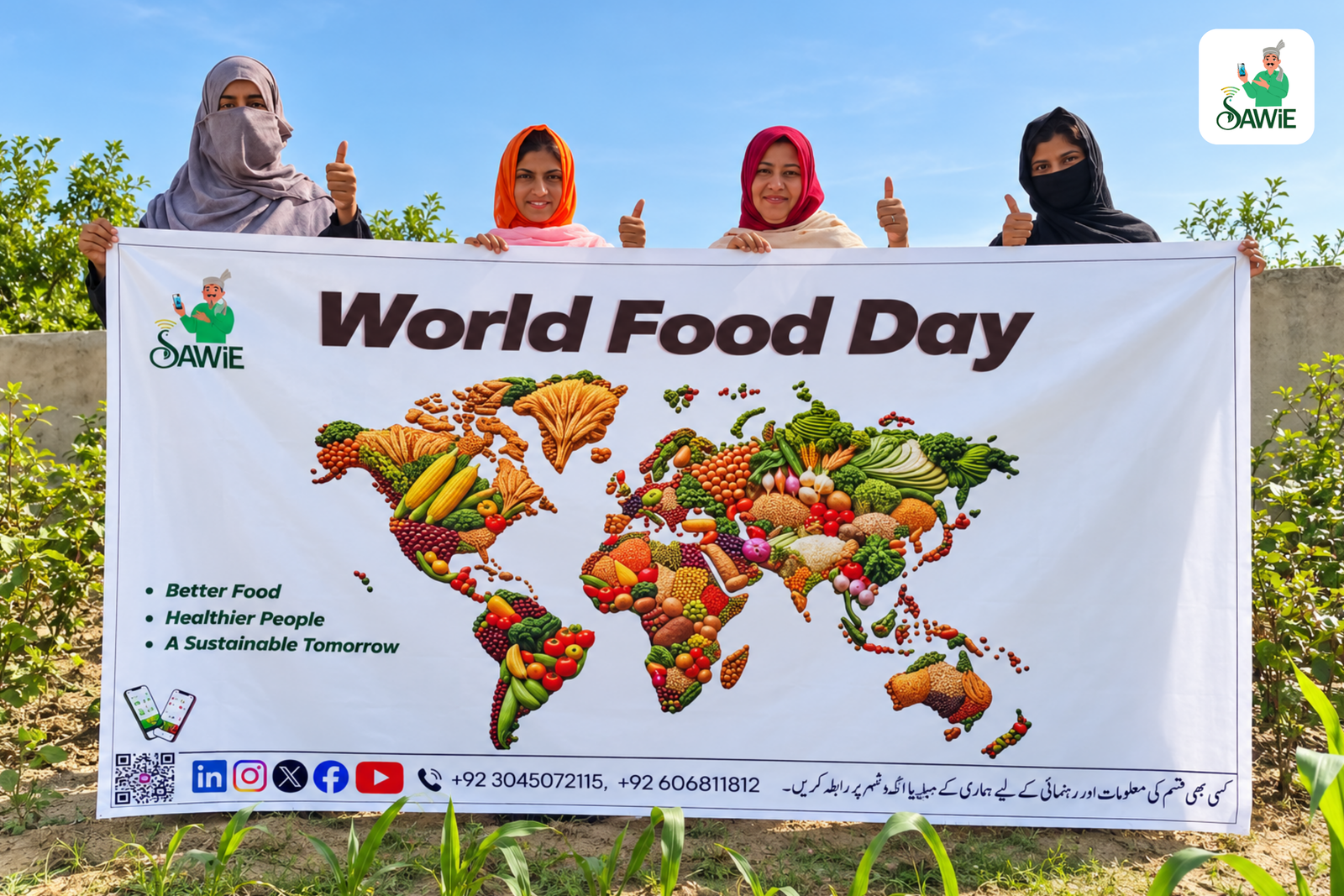
World Food Day 2026: SAWiE Ecosystems Advance Sustainable Rice Farming for a Food-Secure Future
Building climate-resilient food systems through sustainable agriculture, efficient water management, and farmer-focused innovation.
Transforming Rice Cultivation Through Sustainable Practices
World Food Day highlights the importance of building food systems that can nourish a growing population while protecting the natural resources on which agriculture depends. For Pakistan, where agriculture supports millions of livelihoods, sustainable farming practices are essential to strengthening food security and addressing the challenges of climate change.
SAWiE Ecosystems is working to advance climate-smart agriculture in Pakistan by promoting sustainable farming practices, supporting farmers with innovative solutions, and encouraging the responsible use of water and other agricultural resources.
Rice cultivation is an important part of Pakistan’s agricultural economy. However, conventional rice farming can require substantial amounts of irrigation water and contribute to methane emissions when fields remain continuously flooded. Addressing these challenges is an important step towards more sustainable and climate-resilient rice production.
Promoting Alternate Wetting and Drying (AWD)
One of SAWiE’s key approaches to sustainable rice production is Alternate Wetting and Drying (AWD), a water-management technique that involves allowing water levels in rice fields to fall periodically before irrigation is applied again.
Through field-level engagement, farmer awareness, and the promotion of AWD technology, SAWiE is encouraging rice growers to adopt more efficient irrigation practices.
The approach can offer several environmental and agricultural benefits:
Water conservation: Better irrigation management can reduce unnecessary water use and improve water productivity.
Methane emission reduction: Periodic drying of rice fields can reduce methane emissions compared with continuous flooding, when properly managed.
Improved resource efficiency: More informed irrigation decisions can support efficient farm operations and responsible resource use.
Climate-smart agriculture: Sustainable rice practices can contribute to agricultural systems that are better prepared for climate-related challenges.
The actual benefits depend on local soil conditions, water availability, crop management, and the implementation of AWD practices.
Connecting Farmers, Technology, and Climate Action
SAWiE Ecosystems combines farmer engagement with data-driven agricultural solutions to support more informed decision-making. Its broader approach incorporates digital agriculture, field-level monitoring, and sustainable farming practices to help farmers manage resources more effectively.
In sustainable rice production, these efforts also connect with the development of measurement, reporting, and verification (MRV) systems. Such systems are important for tracking agricultural practices and assessing their environmental outcomes.
Through its partnership with AgriCapture, SAWiE is working to advance lower-emission rice production in Pakistan, including the development of a carbon-market pathway for methane reductions from sustainable rice cultivation. The initiative aims to connect measurable climate benefits with potential additional income opportunities for participating smallholder farmers.
Putting Farmers at the Centre of Food Security
Sustainable agriculture is not only about reducing environmental impacts. It is also about helping farmers maintain productive farms, manage resources responsibly, and strengthen their livelihoods.
By promoting climate-smart practices and practical agricultural innovations, SAWiE Ecosystems aims to contribute to a food system that balances agricultural productivity, environmental sustainability, and farmer well-being.
Achieving long-term food security requires collaboration among farmers, researchers, technology providers, businesses, and policymakers. Supporting the adoption of sustainable practices at the farm level is an important part of this collective effort.
A Sustainable Future Starts at the Farm
On World Food Day 2026, SAWiE Ecosystems reaffirms the importance of sustainable agriculture, efficient water management, and farmer-centred innovation in building resilient food systems.
From promoting sustainable rice cultivation through AWD to advancing data-driven agricultural solutions, SAWiE is working towards a future in which food production and environmental responsibility go hand in hand.
Sustainable Rice. Resilient Farmers. A Food-Secure Future.
SAWiE Ecosystems: Smart Agriculture for All.